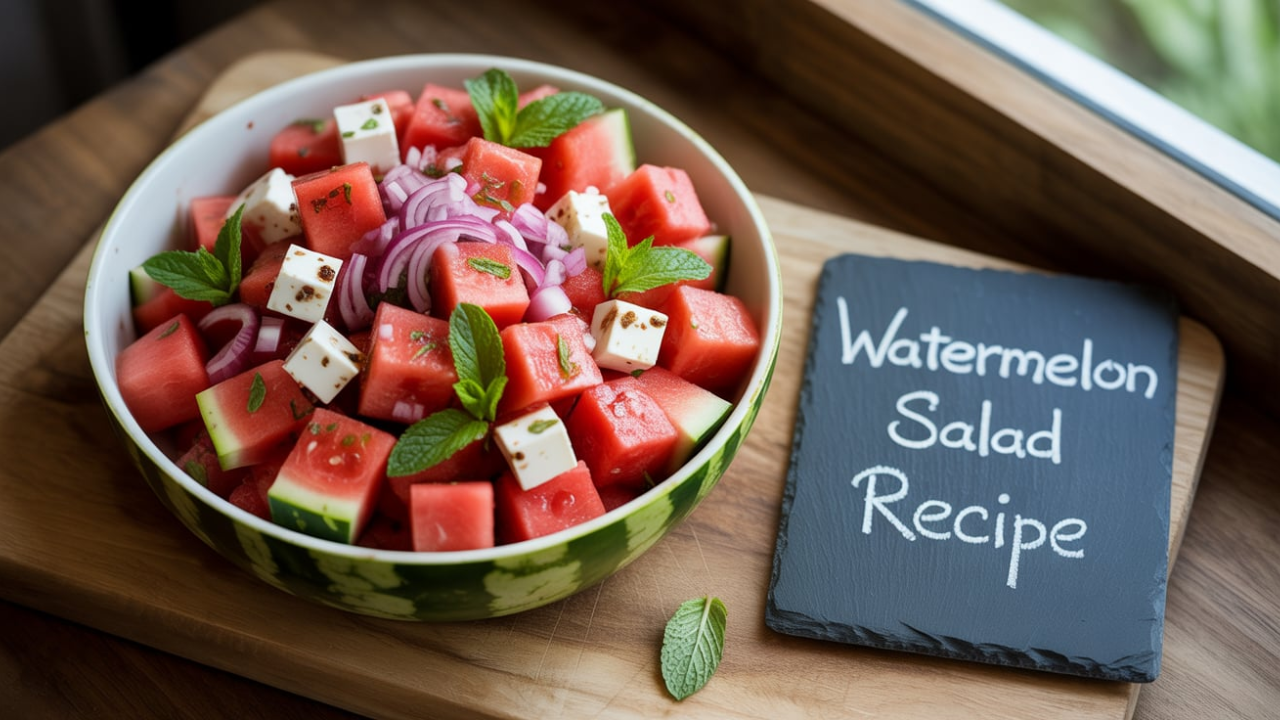
Watermelon is summer’s natural air conditioner. Cold, crisp, and sweet, it’s basically a heatwave antidote. But when you turn that humble watermelon into a watermelon salad, you’ve got yourself something that feels like summer elegance without the price tag of a fancy brunch. This refreshing and easy summer dish takes only 15 minutes from chopping board to table, yet it packs flavor like it took hours.
I’ve made this salad countless times—poolside, at picnics, and even for last-minute guests when my fridge looked like it was auditioning for a minimalist lifestyle blog.
Let’s break it down so you can make it perfectly every single time.
Why Watermelon Salad Works
At first glance, sweet fruit in a salad might seem like a rebel move, but it’s all about contrast. In cooking, contrast is what turns “good” into “memorable.” With watermelon salad, you’re mixing:
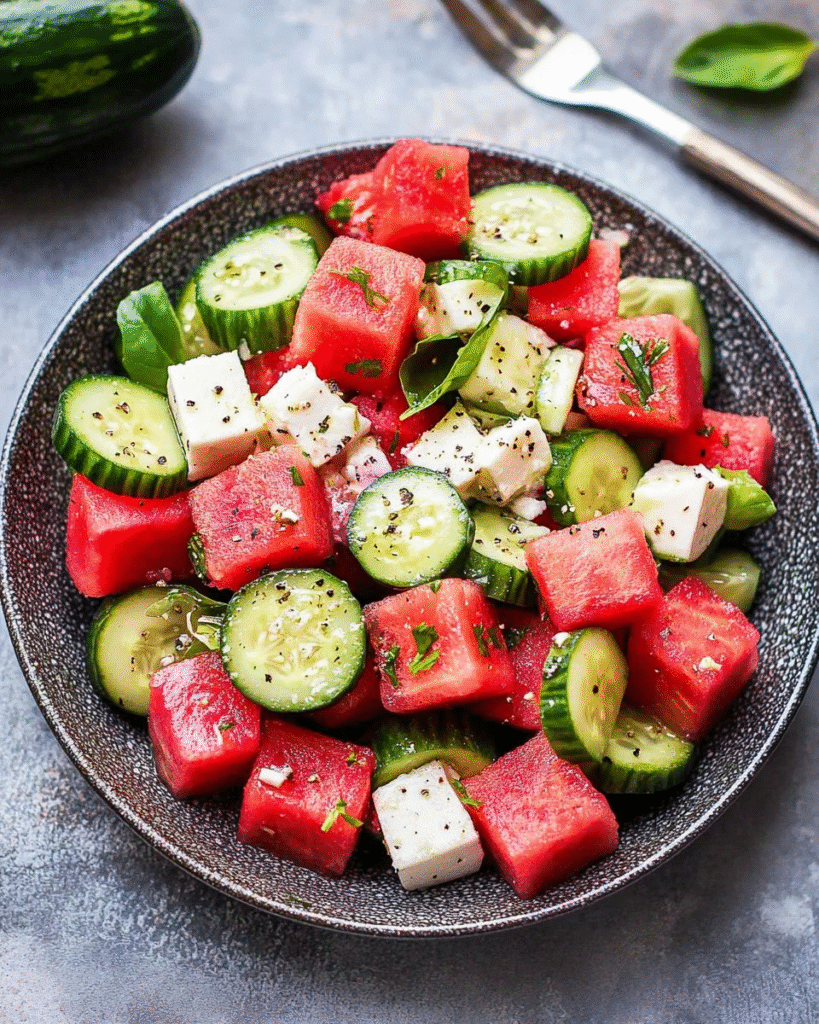
- Sweetness from ripe watermelon.
- Saltiness from feta or cheese alternatives.
- Tanginess from fresh lime juice.
- Herbal freshness from mint or basil.
- Crunch from cucumber, onion, or nuts.
This balance of flavors and textures is backed by science—your taste buds respond best to a variety of sensations. A 2019 study in Food Research International showed that combining sweet and salty flavors increases perceived flavor intensity by up to 36%, meaning you’re getting more taste payoff from the same amount of food.
Ingredients – The Core and the Optional Stars
The great thing about watermelon salad is flexibility. You only truly need four key players, but extras can turn it from great to unforgettable.
The Essentials:
- Watermelon – Sweet, ripe, seedless if possible. About 4 cups cubed.
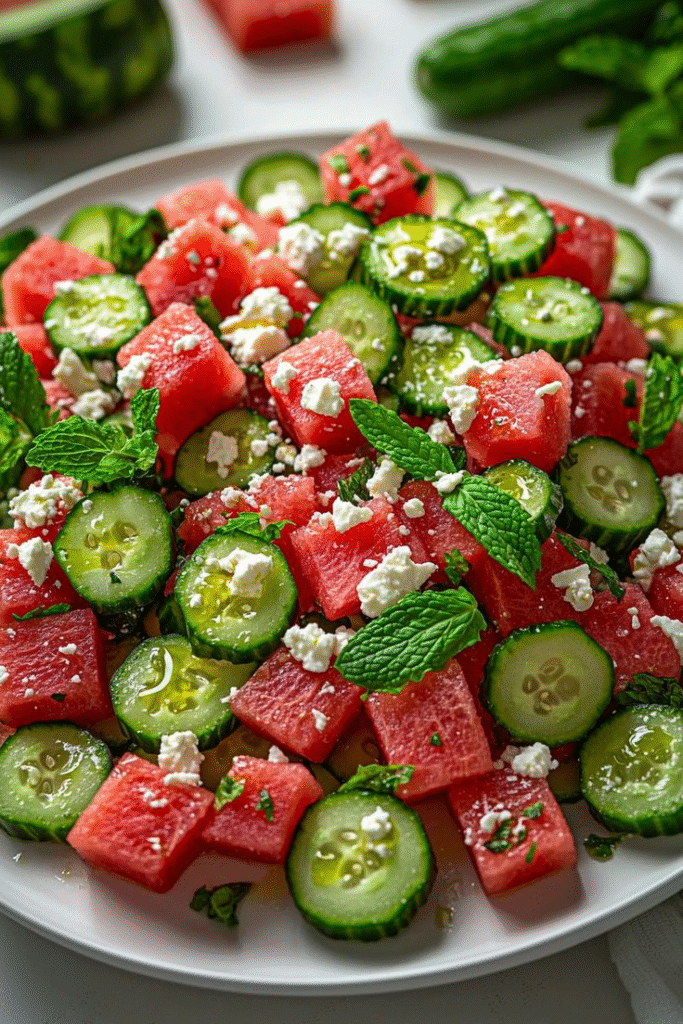
- Feta cheese – Salty, crumbly, creamy contrast.
- Fresh mint leaves – Bright and cooling.
- Lime juice – Fresh-squeezed for zing.
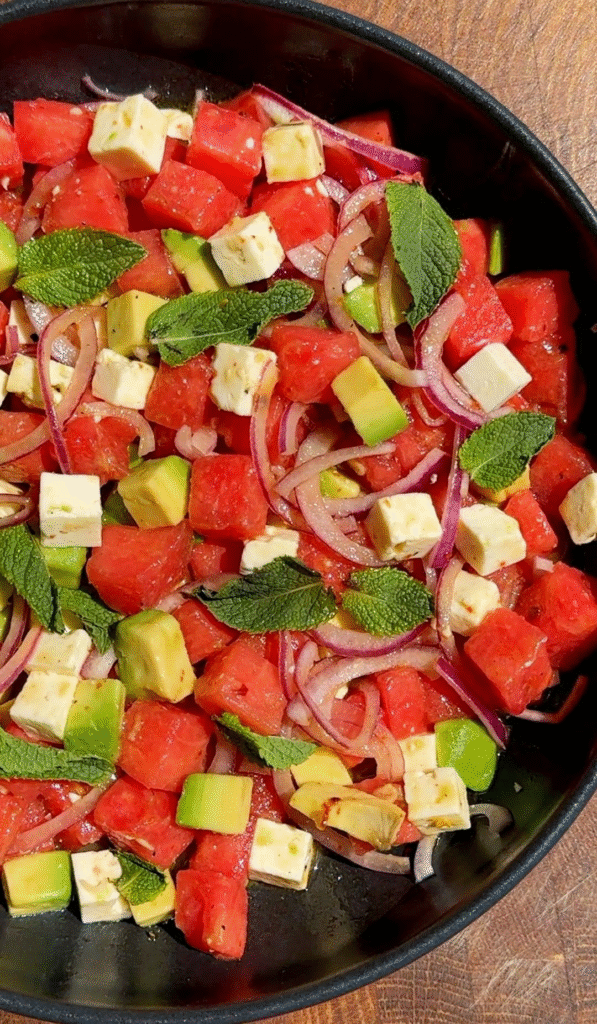
Optional But Game-Changing Additions:
- Cucumber – Adds refreshing crunch.
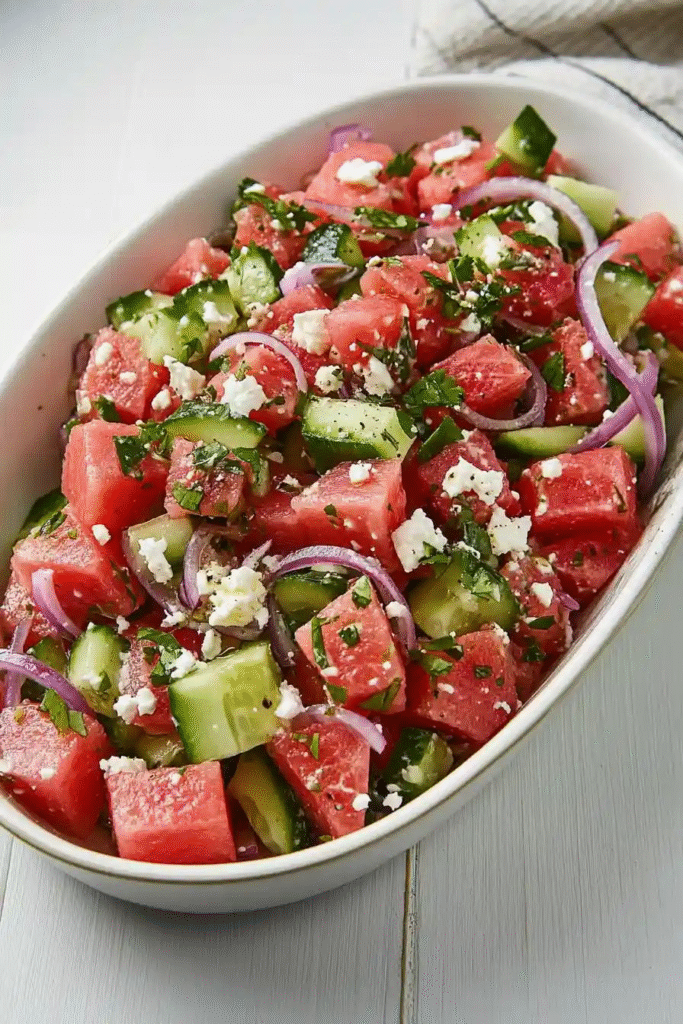
- Red onion – Thin slices for sharpness.
- Basil – A slightly sweeter herbal note.
- Avocado – Creaminess to balance acidity.
- Toasted nuts – Almonds or pistachios for texture.
- Olive oil – A drizzle for a richer mouthfeel.
- Chili flakes – If you like a gentle kick.
Choosing the Best Watermelon
Picking a good watermelon isn’t about luck—it’s about knowing the signs.
Here’s what I’ve learned:
- Look for the field spot – This is the creamy yellow patch where the watermelon sat on the ground. The deeper the yellow, the longer it ripened on the vine.
- Knock test – A deep, hollow sound means it’s juicy.
- Uniform shape – Irregular shapes can mean uneven ripening.
- Weight – Heavier than it looks is a good sign; it’s full of water.
A USDA report on produce quality notes that watermelons with high sugar content (Brix 10–12%) deliver the most satisfying flavor. Translation: ripe melons taste worlds better.
Step-by-Step Recipe – 15 Minutes from Start to Finish
This method is designed to be fast and fuss-free, even if you’re juggling guests, kids, or just your own hunger.
Step 1: Prep the Watermelon
Cut the watermelon into 1-inch cubes. The size matters—small enough to eat in one bite, big enough to keep that juicy crunch.
Step 2: Add the Extras
If you’re using cucumber, slice it thin or cube it. Slice red onions extra thin (a mandoline works wonders).
Step 3: Assemble
In a large bowl, add watermelon cubes, cucumber, and onions (if using). Toss gently.
Step 4: Add Flavor
Sprinkle crumbled feta, torn mint leaves, and drizzle fresh lime juice. If you’re adding olive oil, now’s the time.
Step 5: Adjust
Taste. Add a pinch of salt if needed, or chili flakes if you want some heat.
Step 6: Serve Immediately
Watermelon’s high water content means it releases juice quickly, so serve fresh to keep the texture crisp.
Nutrition Benefits – More Than Just Pretty
A watermelon salad is not just photogenic—it’s loaded with nutritional perks:
- Hydration – Watermelon is 92% water, making it perfect for hot days.
- Low calorie – About 30 calories per 100g.
- Vitamin C – Supports immunity and skin health.
- Lycopene – An antioxidant linked to heart health and reduced risk of certain cancers.
- Potassium – Helps regulate blood pressure.
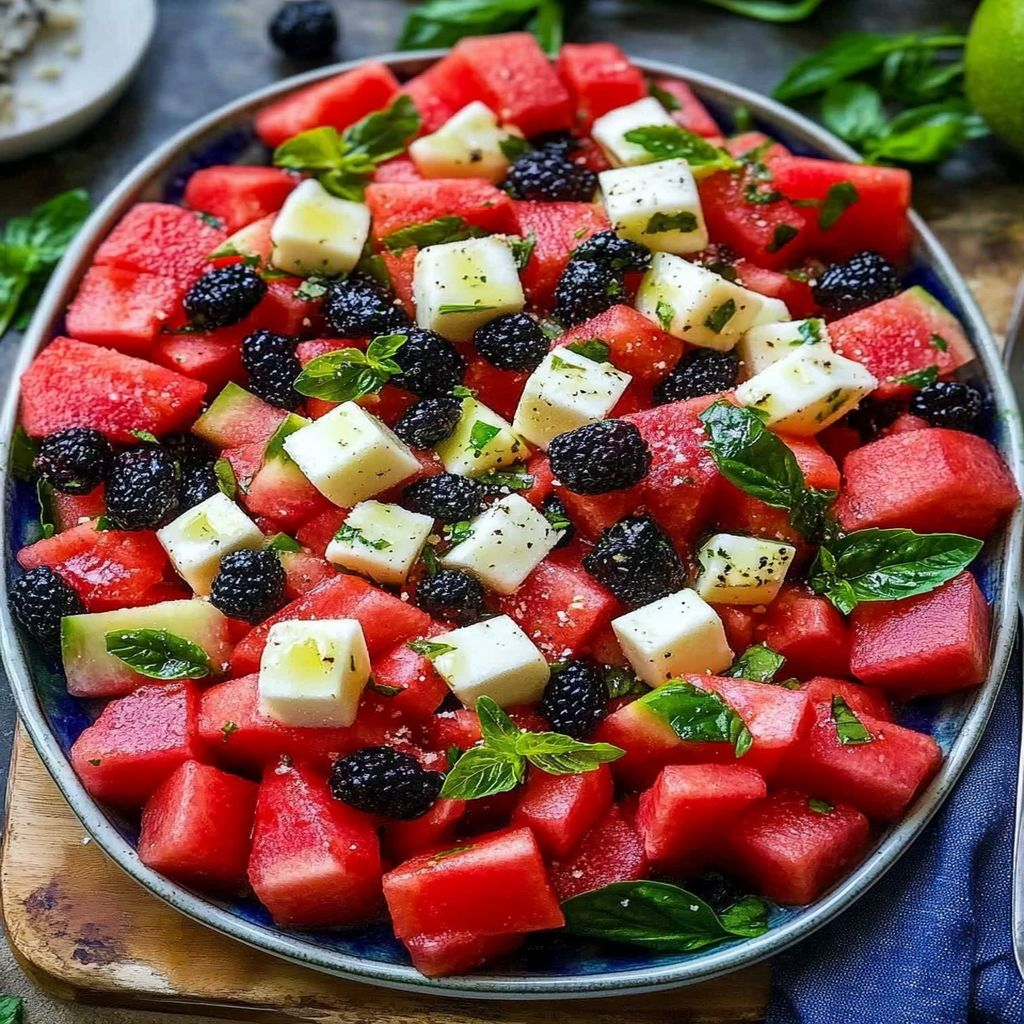
Pairing watermelon with feta adds protein and calcium, while mint aids digestion.
Smart Variations to Try
Once you’ve nailed the classic, experiment. Watermelon salad is a blank canvas.
- Greek-style – Add kalamata olives and oregano.
- Asian twist – Swap lime for rice vinegar, add sesame seeds, and a splash of soy sauce.
- Mexican flair – Tajín seasoning and cotija cheese instead of feta.
- Tropical mix – Toss in mango or pineapple chunks.
Serving Ideas
This salad plays well with:
- Grilled meats like chicken skewers or fish.
- Tacos for a fresh side.
- Charcuterie boards for a sweet-salty bite.
- Summer picnics as a cooling snack.
How to Store Leftovers Without Ruining Them
Watermelon’s juiciness is its blessing and curse—left too long, and you’ve got a soggy mess.
Best storage tips:
- Store undressed components separately.
- If already mixed, refrigerate in an airtight container for up to 12 hours.
- Avoid freezing—it ruins the texture.
Common Mistakes and How to Avoid Them
- Using overripe watermelon – Too mushy for salad.
- Too much dressing – Watermelon already releases liquid.
- Making too far in advance – Serve fresh for best texture.
- Skipping the salt – Salt brings out the sweetness.
Final Thoughts
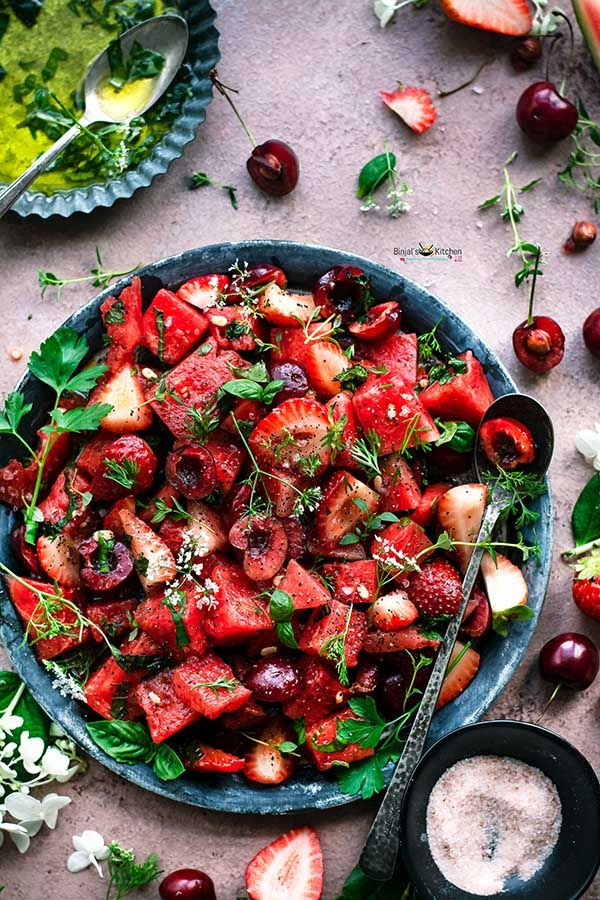
This watermelon salad recipe is the definition of minimal effort, maximum reward. You get a dish that’s bright, hydrating, flavorful, and ready in 15 minutes. It’s proof that you don’t need complicated techniques to create something memorable—just the right flavor contrasts and a willingness to chop a little.