
If you want big flavor in little time, teriyaki salmon is your weeknight best friend. This dish delivers tender, flaky salmon with a sweet-savory glaze that clings to every bite, and it does it in just 20 minutes—no complicated steps, no exotic equipment, and no waiting around for hours.
I’ve made teriyaki salmon on days when I barely had the energy to boil pasta, and somehow, it still came out tasting like something from a high-end Japanese bistro. This recipe is fast, healthy, and ridiculously satisfying—the kind of meal that makes you wonder why you ever ordered takeout in the first place.
Let’s break down everything: from choosing the best salmon, making a teriyaki sauce that doesn’t taste like bottled sugar water, to cooking it so perfectly you’ll swear you’ve been trained by a sushi master.
Choosing the Best Salmon for Teriyaki
The quality of your salmon is the single biggest factor in how good your dish will taste. Think of salmon as the canvas and teriyaki sauce as the paint—you can’t make a masterpiece on low-quality paper.
Here’s your table based on that info:
| Type | Details | Pros | Cons |
|---|---|---|---|
| Fresh vs Frozen | Fresh salmon is ideal, but frozen fillets (with modern flash-freezing) can taste just as fresh if thawed properly. Avoid freezer burn and strong fishy smell. | Fresh: best flavor and texture. Frozen: convenient, longer shelf life, available year-round. | Fresh: shorter shelf life, may not always be available. Frozen: risk of freezer burn or texture changes if thawed incorrectly. |
| Wild vs Farmed | Wild salmon has a deeper flavor and firmer texture. Farmed salmon is fattier and milder. | Wild: rich taste, leaner meat, more natural diet. Farmed: more affordable, consistent availability, higher fat for a buttery texture. | Wild: pricier, seasonal. Farmed: may have less intense flavor, possible environmental concerns. |
| Skin-On vs Skinless | Skin-on helps retain moisture and can be crisped for texture. Skinless avoids skin flavor or texture if you don’t enjoy it. | Skin-On: holds shape, protects flesh, adds crispiness. Skinless: easier to eat for those who dislike skin. | Skin-On: some dislike the texture/taste. Skinless: can dry out faster, less crispy texture. |
Tip: If you’re buying from a supermarket fish counter, ask the fishmonger when the salmon came in. Freshness here is the difference between “restaurant worthy” and “regrettable leftovers.”
Making Teriyaki Sauce That Isn’t Bland
Store-bought teriyaki sauces can be overly sweet, lacking the deep umami you get from fresh ingredients. Making it yourself takes about 3 minutes, and it’s worth every second.
Base Ingredients for Authentic Teriyaki:
- Soy Sauce – This is your umami backbone. Go for low-sodium if you want to control salt levels.
- Mirin – A sweet Japanese rice wine that adds depth. If you can’t find it, a mix of rice vinegar + honey works.
- Brown Sugar or Honey – For sweetness and caramelization.
- Garlic & Ginger – Freshly minced for a punchy, aromatic kick.
- Cornstarch Slurry – Thickens the sauce so it clings to the salmon.
Quick Ratio for a Balanced Sauce:
- 1/4 cup soy sauce
- 2 tbsp mirin
- 1 tbsp brown sugar or honey
- 1 tsp minced garlic
- 1 tsp minced ginger
- 1/2 cup water
- 1 tsp cornstarch mixed with 1 tbsp water
Cooking the Sauce:
- Mix soy sauce, mirin, sugar, garlic, and ginger in a small saucepan.
- Simmer over medium heat for 2–3 minutes.
- Stir in the cornstarch slurry and cook until thickened (about 1 more minute).
You now have a rich, glossy teriyaki glaze that tastes fresh, vibrant, and far more layered than anything from a bottle.
Preparing the Salmon for Even Cooking
If you want the salmon to cook evenly and stay juicy, a little prep work goes a long way.
- Pat it Dry – Excess moisture prevents searing and leaves the fish steaming instead of browning.
- Season Lightly – Teriyaki sauce is already salty, so just a pinch of salt and pepper will do.
- Portion Evenly – Cut fillets into similar sizes so they cook at the same rate.
- Bring to Room Temperature – Let salmon sit out for 10–15 minutes before cooking. Cold fish straight from the fridge tends to overcook on the outside while staying raw inside.
Cooking Methods: Pan-Seared vs Oven-Baked
Both methods work, but they have slightly different results.
Pan-Seared (My Go-To for Speed)
- Heat a skillet over medium-high heat with a little oil.
- Place salmon skin-side down and sear for 3–4 minutes.
- Flip and cook for another 2–3 minutes.
- Brush with teriyaki sauce in the last minute to caramelize.
Oven-Baked (Best for Hands-Off Cooking)
- Preheat oven to 400°F (200°C).
- Place salmon on a foil-lined tray.
- Brush with teriyaki sauce and bake for 10–12 minutes.
- Brush with extra sauce halfway through for more flavor.
Pro Trick: If you pan-sear first, then finish in the oven for 3–4 minutes, you get the best of both worlds—crispy edges and tender insides.
Timing Is Everything
Overcooking salmon is like overbrewing coffee—it goes from great to bitter in a flash. The FDA recommends cooking salmon to an internal temp of 145°F (63°C), but many chefs stop at 125–130°F for a juicier texture.
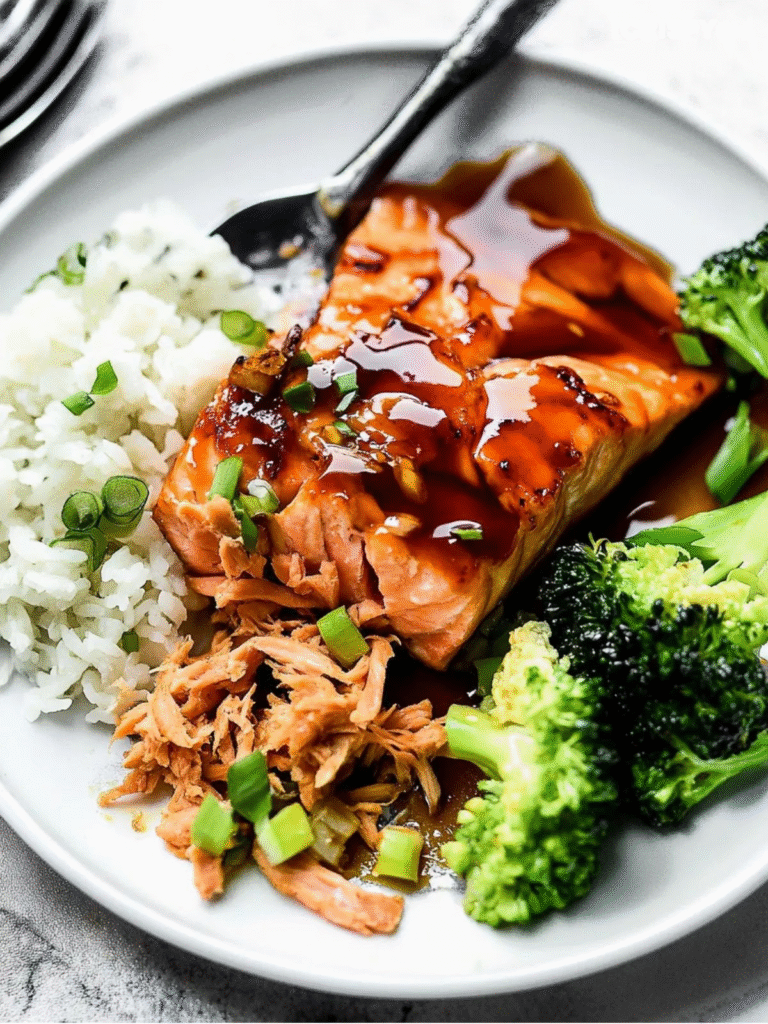
Signs It’s Done Without a Thermometer:
- The flesh flakes easily with a fork.
- The color changes from translucent to opaque.
- There’s slight resistance when you press it with your finger, but it bounces back.
For a 1-inch thick fillet, total cooking time is usually 6–8 minutes. Keep your eye on it—salmon waits for no one.
Serving Teriyaki Salmon
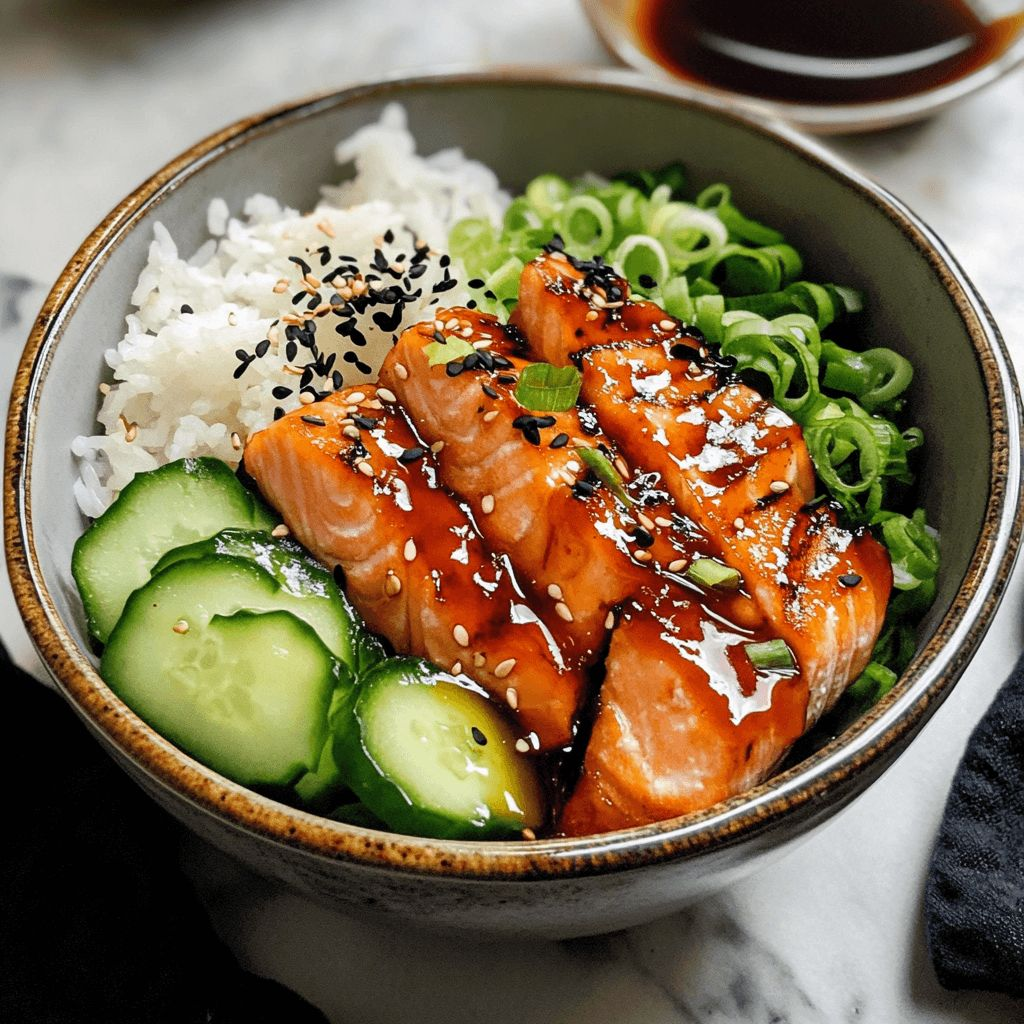
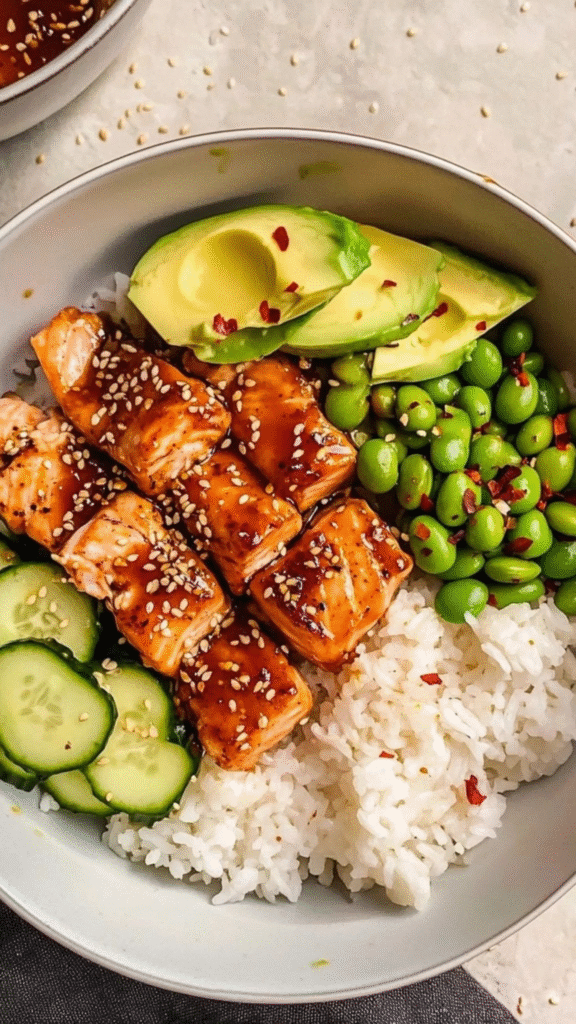
Teriyaki salmon is versatile—you can serve it with steamed rice, noodles, or even a fresh Asian slaw for a lighter meal.
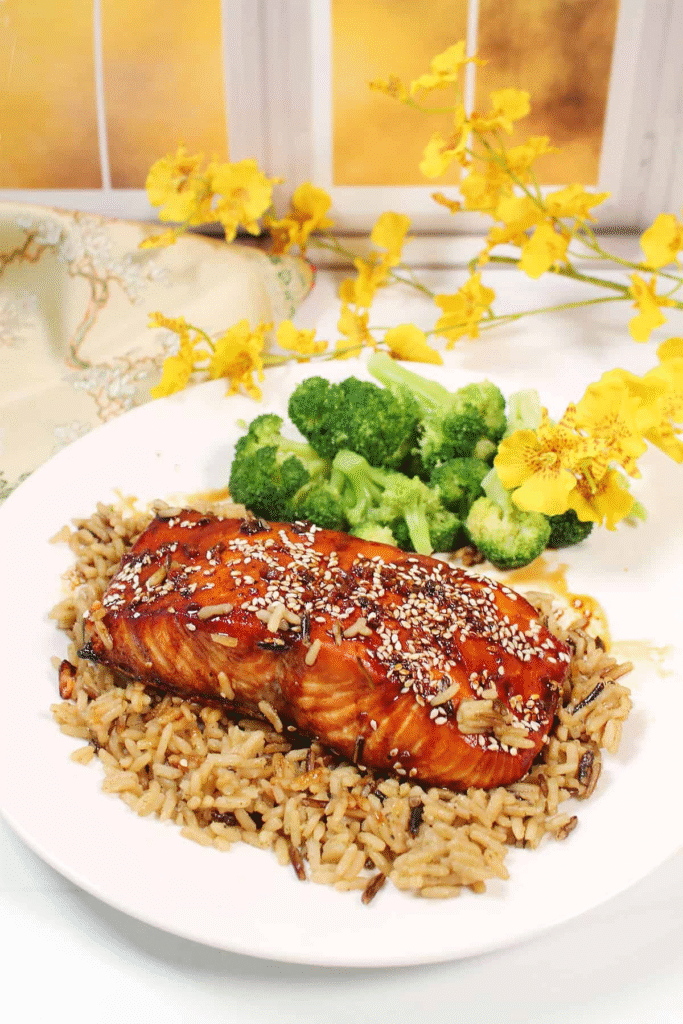
Topping Ideas:
- Toasted sesame seeds for nuttiness.
- Chopped scallions for freshness.
- A squeeze of lime for brightness.
Side Dish Pairings:
- Garlic sautéed green beans.
- Steamed broccoli with a light drizzle of sesame oil.
- Pickled cucumber salad for a crunchy contrast.
Nutritional Benefits That Make This Dish a Smart Choice
Salmon is not just delicious—it’s a nutritional powerhouse.
Per 4-ounce serving:
- ~200 calories
- 22g protein for muscle repair
- Omega-3 fatty acids for heart and brain health
- Vitamin B12 and D for energy and immunity
Pairing it with fresh veggies and moderate carbs makes it a balanced, high-protein meal that’s perfect for lunch or dinner.
Common Mistakes to Avoid
Even though this recipe is simple, there are a few traps to watch out for:
- Using too much sauce too early – It can burn in the pan before the salmon is cooked. Apply sauce in the last minute or after cooking.
- Overcrowding the pan – This traps steam, preventing a nice sear. Cook in batches if needed.
- Skipping the rest period – Let salmon sit for 2 minutes after cooking to allow juices to redistribute.
Final Thoughts
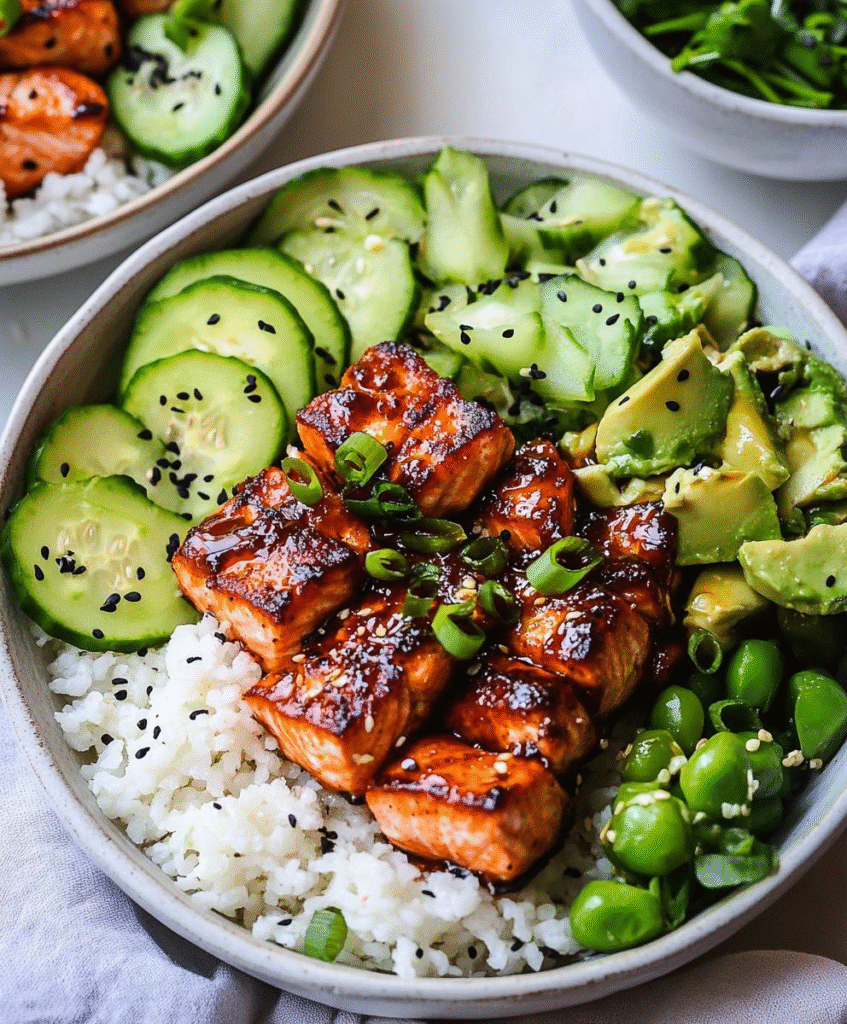
Once you master this 20-minute teriyaki salmon, it’s going to be in your weekly rotation. The sweet-savory glaze, tender flaky fish, and quick prep time make it unbeatable for busy days. You can even make extra sauce and store it in the fridge for future meals—it works great on chicken, tofu, or stir-fried veggies.