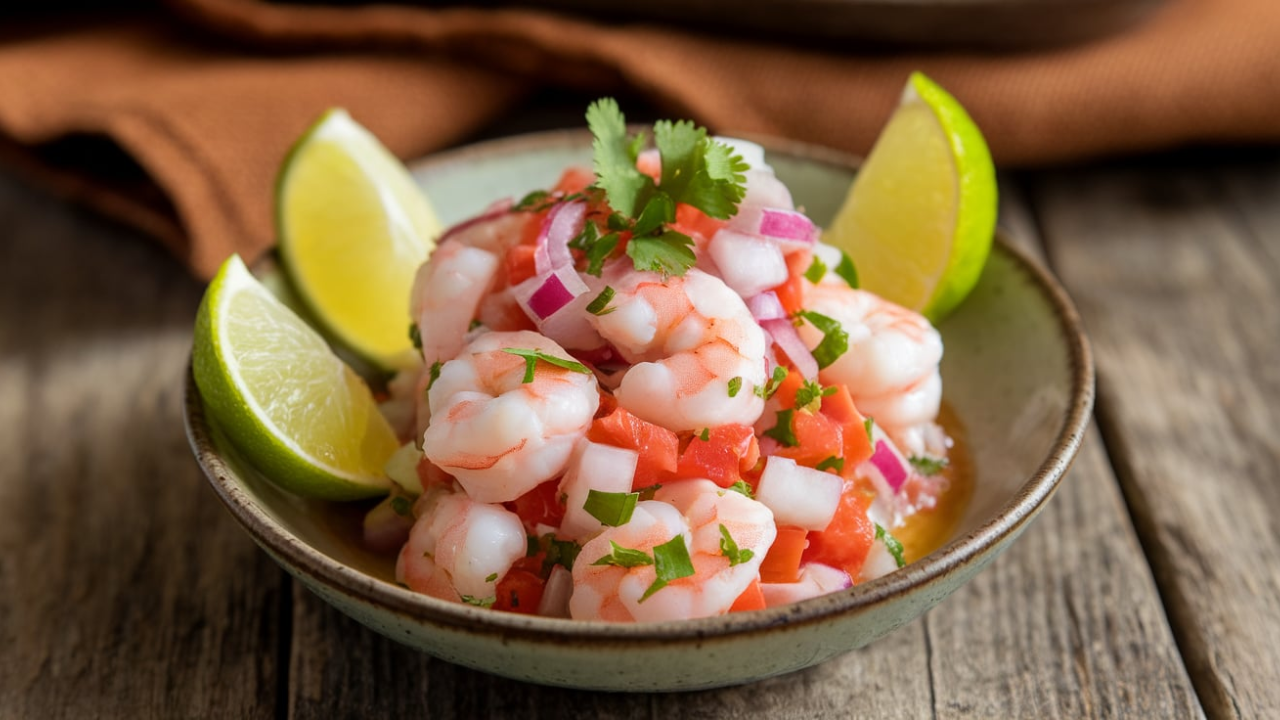
When you need a dish that feels like summer in a bowl, shrimp ceviche is your answer. No ovens, no stovetops, no sweating over boiling pots—just a quick, zesty mix of shrimp, citrus, and crisp vegetables that tastes like it came straight from a beachside shack. If you can chop, stir, and squeeze a lime without flinching, you can have a restaurant-level ceviche on the table in 25 minutes.
This isn’t just about tossing raw seafood in citrus juice and hoping for the best. Done right, shrimp ceviche has balanced acidity, bright flavors, and a satisfying bite. Done wrong, you end up with a bowl of mushy shrimp and watery vegetables. Let’s make sure you land on the first option—every single time.
Understanding the Secret Behind Shrimp Ceviche
The magic of ceviche lies in citrus acid “cooking” the shrimp. This isn’t cooking with heat; it’s a process called denaturation. The acid in lime and lemon juice changes the shrimp’s proteins, turning them firm and opaque—just like heat would.
Here’s the science in plain terms:
- Heat cooking: Uses thermal energy to change protein structure.
- Citrus cooking: Uses acid to achieve a similar result without heat.
According to food safety guidelines from the USDA, citrus “cooking” doesn’t kill bacteria as effectively as heat, so you either:
- Use very fresh shrimp from a trusted source, or
- Blanch the shrimp quickly before marinating.
Personally, I prefer blanching—10 seconds in boiling water, then straight into an ice bath. It ensures safety while keeping that ceviche texture.
Choosing the Right Shrimp
Shrimp is the star of the show, so quality matters. The wrong shrimp will give you a rubbery, fishy-tasting ceviche.
Size: Go for medium to large shrimp (21–30 count per pound). They’re big enough to hold their shape, small enough to absorb flavor quickly.
Fresh vs. Frozen:
- Fresh shrimp: Amazing if you live near the coast.
- Frozen shrimp: Often better than “fresh” if you’re inland, since they’re frozen right after being caught.
Peeled or Shell-On: Peeled saves you time, but shell-on tends to have better flavor. If you have 5 extra minutes, peel them yourself after blanching.
Pro tip: Avoid pre-cooked shrimp for ceviche—it just won’t absorb the citrus and will turn rubbery.
The Essential Ingredients You’ll Need
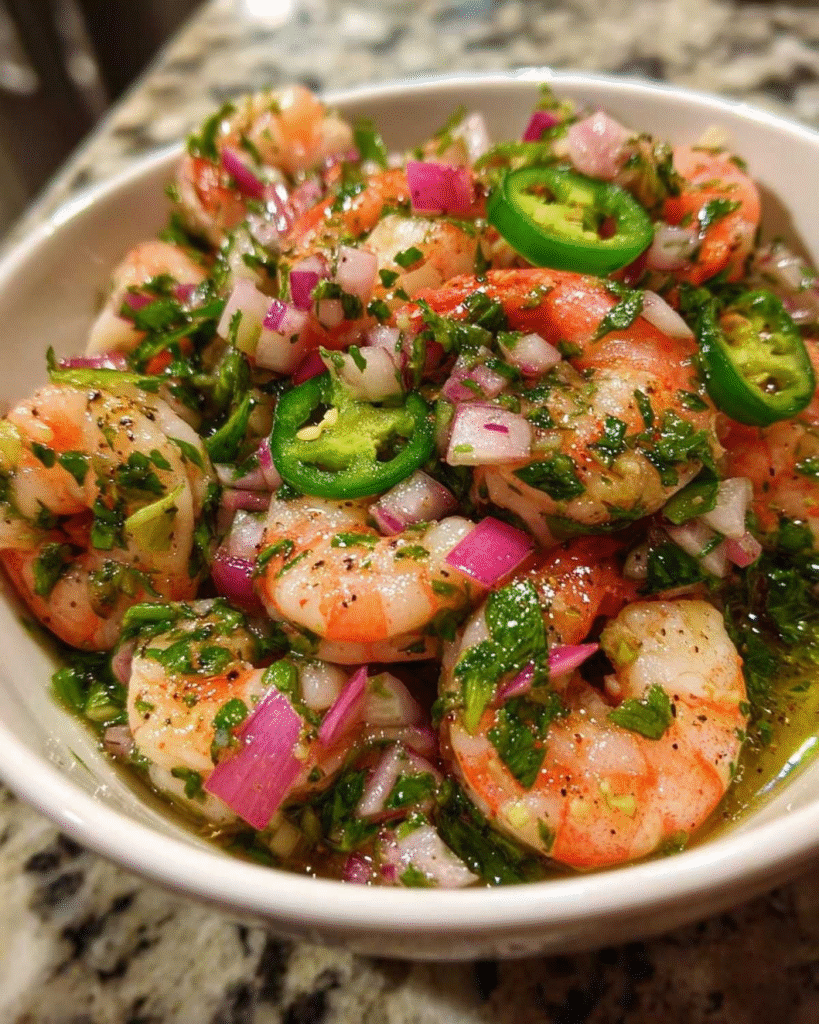
Making shrimp ceviche is a lot like making salsa—your choice of ingredients determines if it tastes flat or unforgettable. Here’s my go-to combination:
- Shrimp: 1 lb, peeled, deveined, and chopped into bite-sized pieces.
- Citrus juice: About 1 cup (70% lime, 30% lemon).
- Red onion: ½ medium, finely diced for crunch and sweetness.
- Tomato: 1 large, deseeded, diced for juiciness without watering it down.
- Cucumber: ½ cup, diced for refreshing crunch.
- Cilantro: ¼ cup chopped—skip it if you’re one of those people who taste soap.
- Jalapeño or serrano: Finely minced, seeds removed if you don’t like too much heat.
- Salt & pepper: To taste—don’t underestimate how much salt ceviche needs.
- Optional extras: Avocado chunks, mango, or even a splash of orange juice for sweetness.
The 25-Minute Method – Step-by-Step
The clock starts now.
Step 1 – Blanch the shrimp (2 minutes)
- Bring a small pot of water to a boil.
- Drop the shrimp in for 10 seconds until just starting to turn pink.
- Immediately drain and place in an ice bath.
Step 2 – Chop and prep vegetables (8 minutes)
- Dice the onion, tomato, cucumber, and peppers.
- Chop cilantro.
- If adding avocado or mango, prep them last to avoid browning.
Step 3 – Citrus marinade (2 minutes)
- In a large glass or ceramic bowl (never metal—it reacts with the acid), combine lime and lemon juice.
Step 4 – Marinate the shrimp (10 minutes)
- Drain shrimp from the ice bath, pat dry, and add to citrus juice.
- Stir occasionally to ensure even coating. You’ll see them turn opaque quickly.
Step 5 – Combine and season (3 minutes)
- Add all vegetables, cilantro, and salt to the shrimp.
- Stir gently. Taste and adjust with more salt, pepper, or citrus if needed.
Step 6 – Serve immediately
- Spoon into bowls or onto tostadas.
- Garnish with avocado slices or extra jalapeño if you like heat.
The Key to Perfect Texture
Ceviche success is 90% about not over-marinating. Leave shrimp in citrus for too long and you’ll end up with something chalky.
Timing sweet spot:
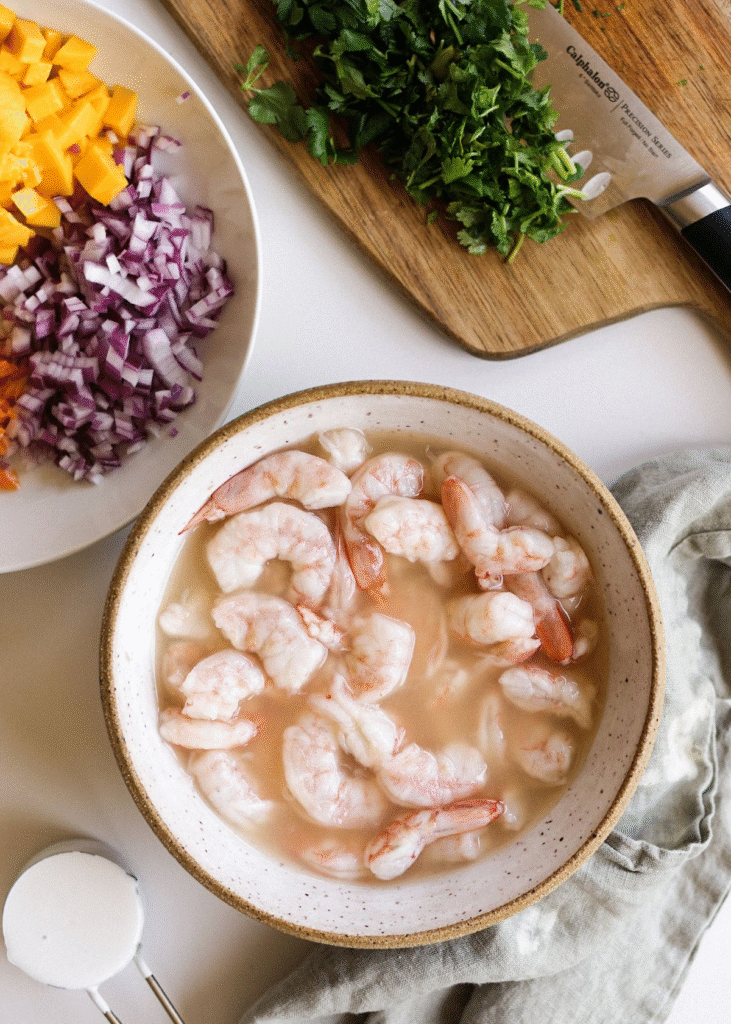
- Raw shrimp: 15–20 minutes.
- Blanched shrimp: 8–12 minutes.
If you want to make it ahead, keep the shrimp and citrus separate until 20 minutes before serving. This prevents the acid from continuing to “cook” the shrimp.
Balancing Flavor Like a Pro
Good ceviche hits three main notes:
- Acidity from the citrus
- Freshness from vegetables and herbs
- Heat from chili peppers
If one is overpowering, the dish feels unbalanced. Here’s how to fix it:
- Too sour? Add diced mango or a pinch of sugar.
- Too bland? Increase salt—it wakes up all the flavors.
- Too spicy? Add extra cucumber or tomato to mellow it out.
Smart Shortcuts for Busy Days
Even though it’s already a fast dish, you can speed things up:
- Buy peeled, deveined shrimp.
- Use a food processor to pulse onions, cucumber, and peppers.
- Use bottled lime juice only in emergencies (fresh juice is twice as flavorful).
Serving Ideas That Go Beyond the Bowl
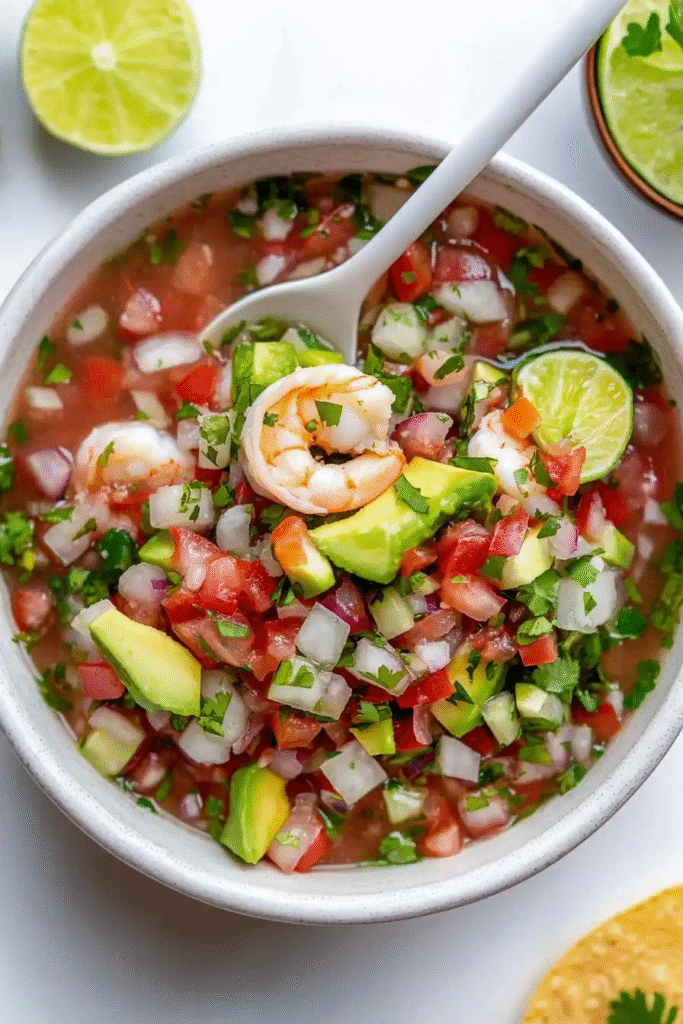
Ceviche isn’t just a side dish—it can be the main event. Here are a few serving ideas:
- On tostadas with avocado and hot sauce.
- In lettuce cups for a low-carb option.
- As a topping for grilled fish for a double seafood hit.
- In small shot glasses for party appetizers.
Storing and Safety Tips
Ceviche is best fresh, but leftovers can last:
- Store in the fridge in an airtight container for up to 24 hours.
- After that, the texture and flavor deteriorate.
- Never leave ceviche at room temperature for more than 2 hours—bacteria love warm seafood.
Nutritional Benefits
A 1-cup serving of shrimp ceviche typically contains:
- Calories: ~140
- Protein: 18g
- Fat: 3g (mainly from avocado if added)
- Carbs: 8g
- Vitamin C: Over 70% of daily needs from citrus and vegetables
It’s naturally low-carb, high-protein, and packed with antioxidants from fresh produce.
Common Mistakes to Avoid
- Over-marinating – Leads to chalky shrimp.
- Using metal bowls – Acid reacts with metal, giving a metallic taste.
- Not salting enough – Salt is the bridge between citrus and sweetness.
- Using watery tomatoes – Always deseed to prevent a soupy mess.
A Personal Anecdote – My First Ceviche Disaster
The first time I made shrimp ceviche, I left the shrimp in lime juice for an hour while I “got other things ready.” Big mistake. The shrimp turned white and tough as erasers. My friends smiled politely, but one quietly asked if I’d grilled them earlier. Lesson learned—watch the clock.
Final Thoughts
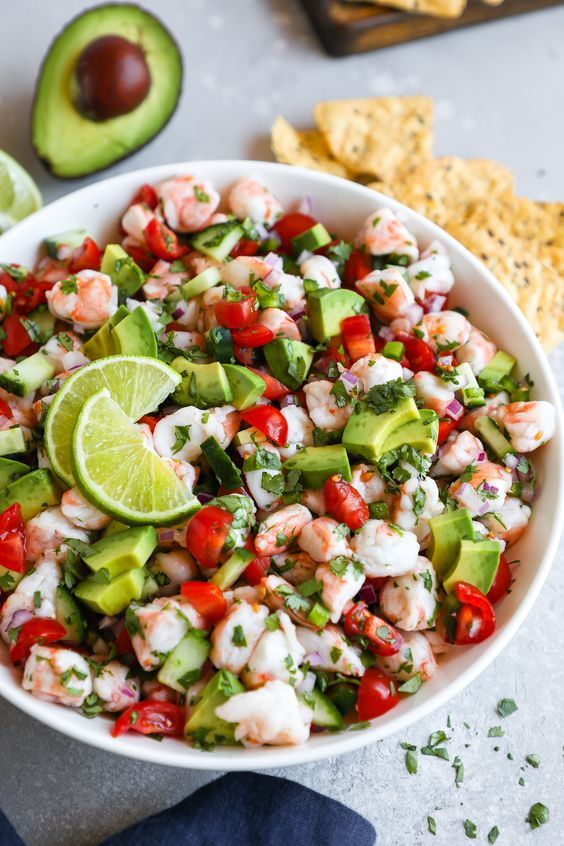
Shrimp ceviche is proof that incredible flavor doesn’t require hours in the kitchen. With fresh ingredients, balanced seasoning, and a careful eye on the clock, you can create something that tastes like it belongs on a coastal restaurant menu—all in under 25 minutes.
Once you master the basics, you can tweak it endlessly—add fruit for sweetness, swap herbs, or play with spice levels. The key is keeping it fresh, balanced, and served immediately.