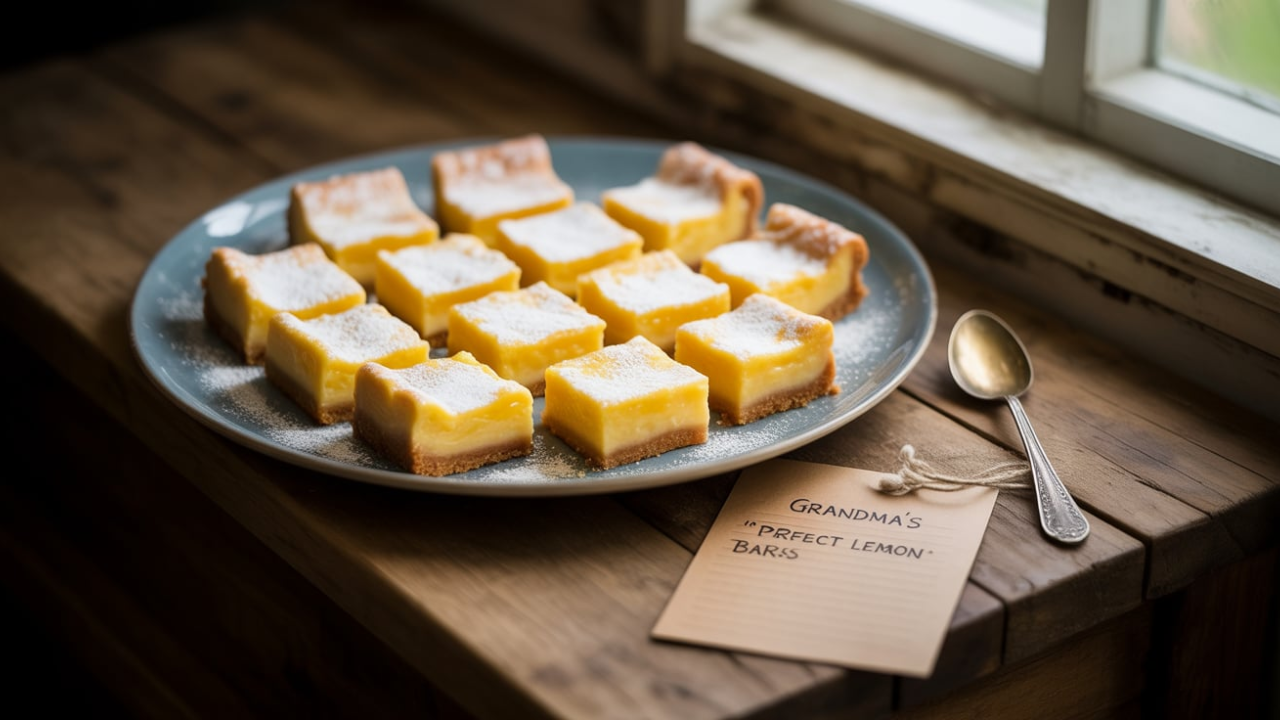
There’s something about lemon bars that makes them impossible to resist. The bright citrus flavor, the buttery shortbread crust, the delicate dusting of powdered sugar—it’s like sunshine you can eat.
If you’ve been on the hunt for a foolproof way to make perfect lemon bars in 45 minutes, you’ve come to the right kitchen. This isn’t going to be one of those vague recipes that leaves you guessing. I’m going to walk you through each detail, from the right pan size to how to get that smooth lemon layer without overcooking it.
I’ve made these countless times for bake sales, family gatherings, and even as a little “thank you” gift for neighbors. Every time, they disappear fast. If you want your lemon bars to be tangy, smooth, and balanced with the right amount of sweetness, follow along.
Choosing the Right Ingredients for Lemon Bars
Before you turn on the oven, let’s talk ingredients. Lemon bars are deceptively simple—shortbread crust, lemon filling, powdered sugar—but every component plays a role in the final result.
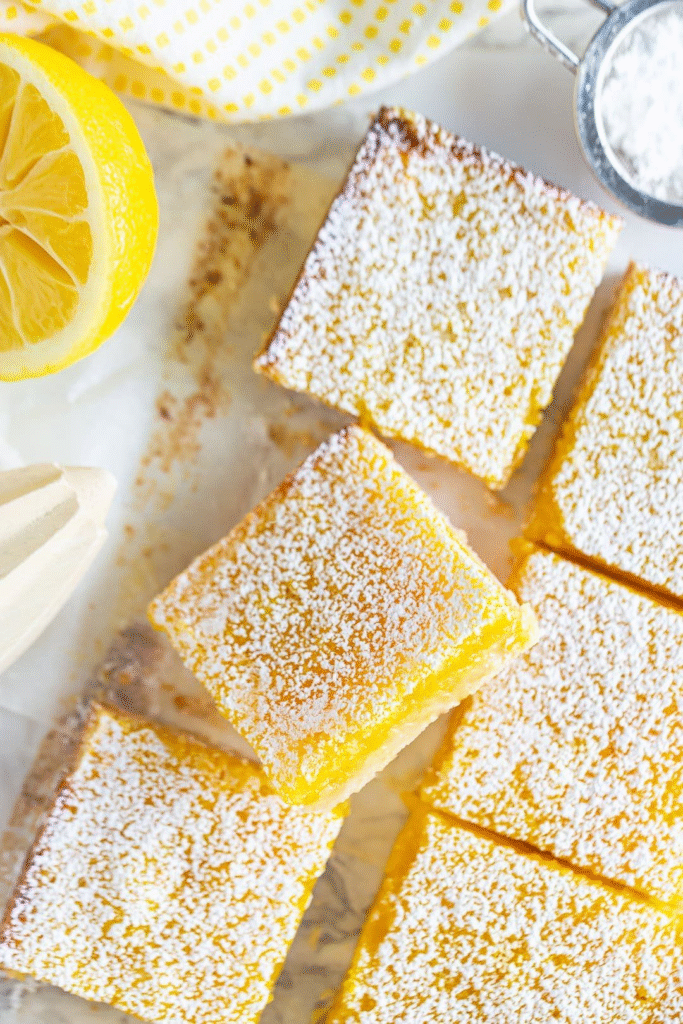
Lemons – Fresh or Bottled?
If you want your lemon bars to taste fresh and vibrant, you need fresh lemons. Bottled lemon juice will give you a flat, almost bitter tang that can ruin the experience. A medium lemon yields about 2–3 tablespoons of juice, so for a standard 9×13-inch pan, you’ll need around 4–5 lemons.
- Zest is just as important as juice: Zest contains essential oils that add depth. Without it, your lemon bars can taste one-dimensional.
- Use a microplane for zesting: This ensures fine shreds and avoids bitter white pith.
Sugar – The Balancing Act
Too little sugar and your bars will taste sour enough to make your lips pucker. Too much and you’ll drown the lemon flavor. The ideal sugar-to-lemon ratio for lemon bars is about 1 cup of sugar for every ½ cup of lemon juice.
Butter – The Foundation of the Crust
Cold, unsalted butter makes the best shortbread crust. Cold butter creates tiny steam pockets as it bakes, resulting in a flaky yet firm base that can hold the soft lemon filling without getting soggy.
Eggs – The Creamy Binder
Eggs set the lemon filling. If you underuse them, your bars will be too runny; overuse, and they’ll be overly firm and eggy. The magic number for a standard recipe is 4 large eggs for a 9×13-inch batch.
The Perfect Shortbread Crust
The crust is the unsung hero of lemon bars. It supports the tangy filling and provides a buttery contrast.
Ingredients for a standard 9×13-inch pan:
- 2 cups all-purpose flour
- ½ cup powdered sugar
- 1 cup cold unsalted butter, cubed
- Pinch of salt
Method:
- Preheat your oven to 350°F (175°C).
- In a mixing bowl, combine flour, powdered sugar, and salt.
- Cut in the butter using a pastry cutter or your fingers until the mixture resembles coarse crumbs.
- Press the mixture evenly into the bottom of a greased or parchment-lined 9×13-inch baking pan.
- Bake for 15–18 minutes until lightly golden.
Pro tip: Don’t overbake the crust during this stage—it will bake further once you add the filling.
Making the Silky Lemon Filling
This is where the magic happens—the layer that makes lemon bars irresistible.
Ingredients:
- 1 ½ cups granulated sugar
- 4 large eggs
- ½ cup fresh lemon juice
- 1 tablespoon lemon zest
- ¼ cup all-purpose flour
Method:
- Whisk the sugar and eggs until smooth. You don’t want to beat too much air into it, or you’ll get bubbles in your filling.
- Add lemon juice and zest, whisking until fully combined.
- Sift in the flour to avoid lumps, and whisk until smooth.
- Pour over the baked crust while it’s still warm—this helps the filling bind better to the crust.
Baking to Perfection
The filling should be set but still have a slight jiggle in the center when you remove it from the oven. This usually takes 20–25 minutes at 350°F.

Signs they’re done:
- The edges are slightly golden but not brown.
- The center is just set, not liquid.
- When lightly touched, it feels firm but not dry.
Overbaking will make the filling rubbery; underbaking will make it too runny.
Cooling and Cutting Like a Pro
Lemon bars need to cool completely before cutting. If you try to slice them while warm, you’ll end up with a gooey mess. Once cooled, refrigerate for at least 1–2 hours before slicing.
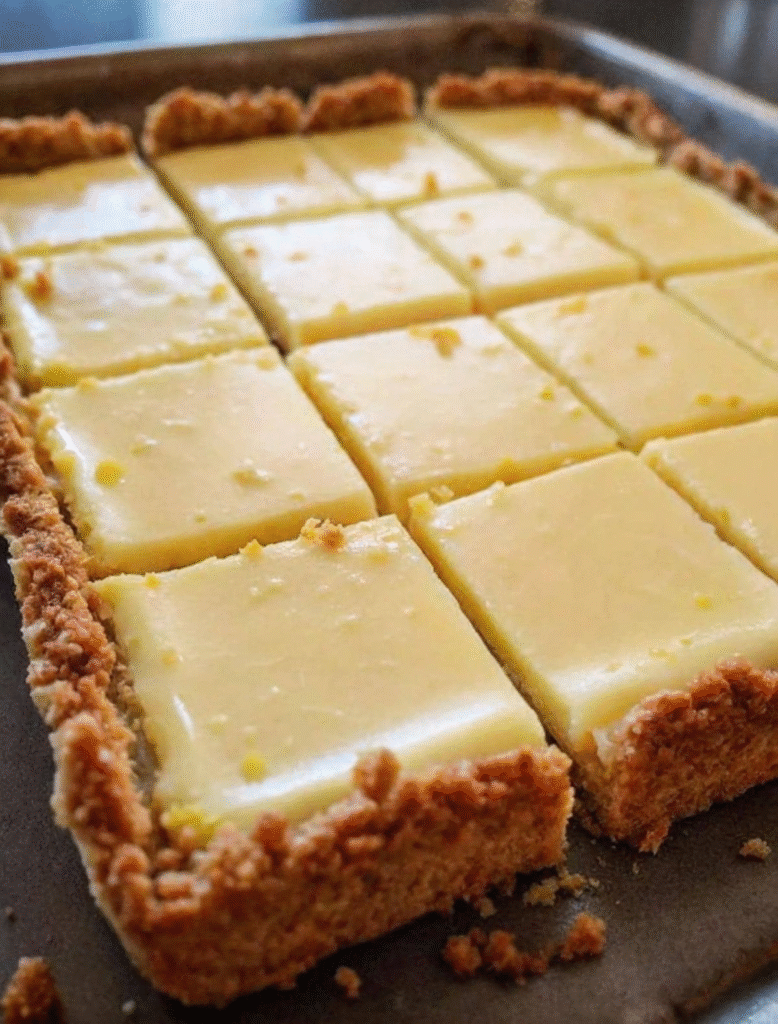
Cutting tips:
- Use a sharp knife dipped in hot water and wiped dry between cuts.
- For perfect edges, trim the sides before serving.
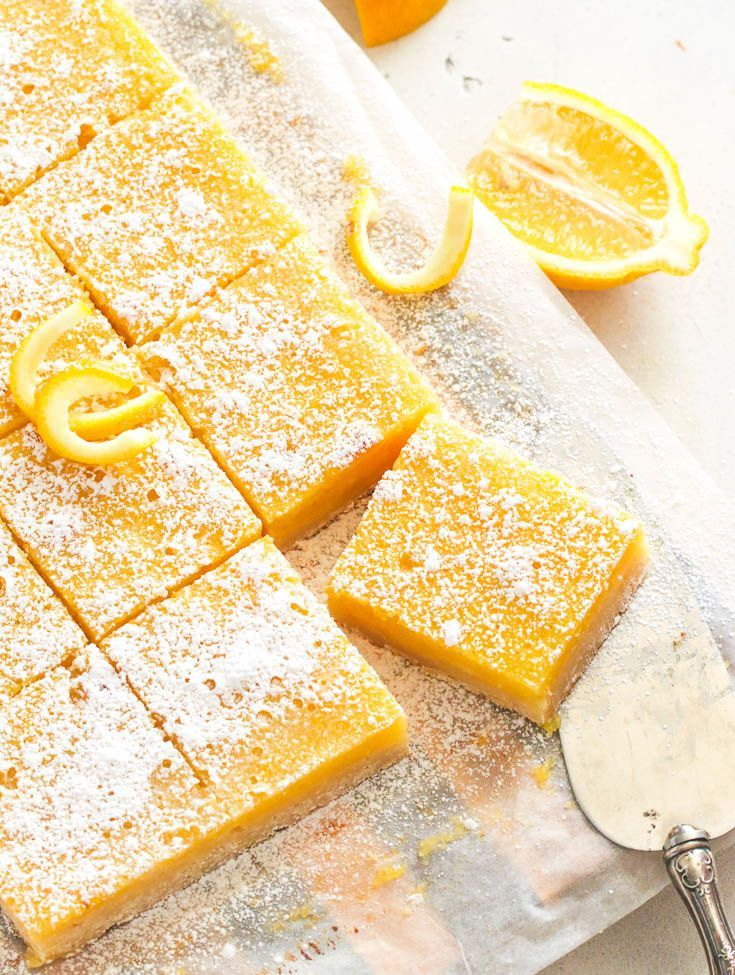
Dust generously with powdered sugar right before serving—if you do it too early, the sugar will dissolve into the filling.
Storing Lemon Bars
Lemon bars can be stored in the refrigerator for up to 5 days. Place parchment paper between layers to prevent sticking. You can also freeze them for up to 3 months; thaw in the refrigerator before serving.
Common Mistakes to Avoid
- Using bottled lemon juice – The flavor will never be as bright.
- Overmixing the filling – Introduces too much air, leading to bubbles and cracks.
- Cutting too soon – The filling won’t have set properly.
- Skipping the zest – You’ll lose half the lemon flavor.
Nutritional Breakdown
For a 2-inch square serving:
- Calories: ~180
- Carbs: ~27g
- Sugar: ~20g
- Fat: ~7g
- Protein: ~2g
Lemon bars aren’t a low-calorie treat, but they are a satisfying dessert for those moments when you want something tangy and sweet.
Why This Recipe Works Every Time
The balance between tart lemon and buttery crust is the core of a good lemon bar. By keeping the crust slightly underbaked before adding the filling, you avoid overcooking and maintain texture.
Using fresh lemon juice and zest makes the flavor bright and vibrant. And baking at a moderate temperature prevents curdling while giving you a smooth custard-like filling.
Variations to Try
- Meyer Lemon Bars – Slightly sweeter and less tangy.
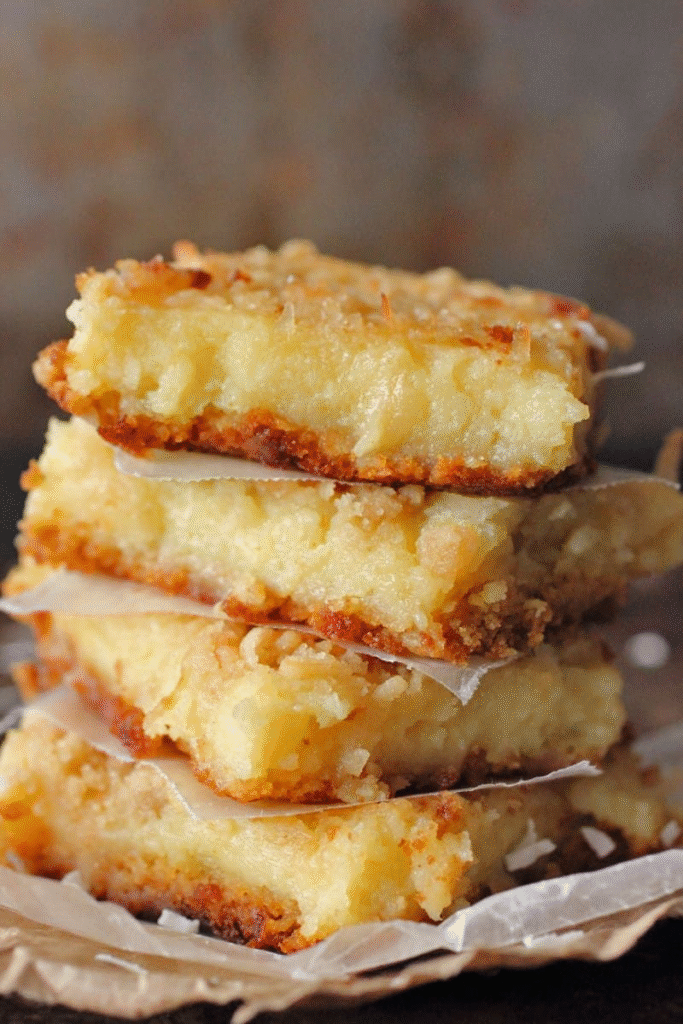
- Coconut Lemon Bars – Sprinkle shredded coconut on top before baking.
- Berry Swirl Lemon Bars – Add a raspberry puree swirl before baking.
- Gluten-Free Lemon Bars – Use almond flour for the crust.