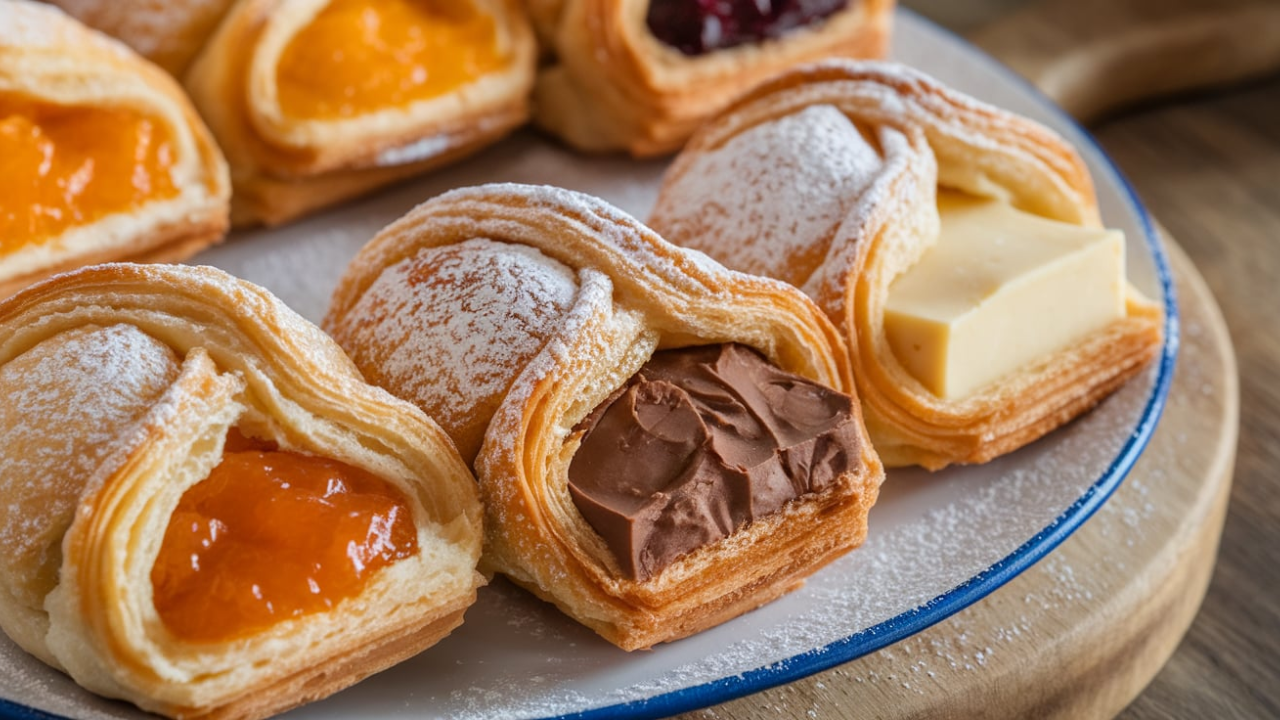
If you’ve ever strolled past a bakery in Switzerland early in the morning, you’ve probably been ambushed by the buttery scent of freshly baked Gipfeli. T
hink of them as the Swiss cousin to the French croissant—slightly denser, less flaky, but just as indulgent. And the best part? You don’t have to book a flight to Zurich or line up at a bakery at dawn. You can make these at home, and yes, it’s unbelievably easy.
I’ll walk you through everything: the history of Gipfeli, what makes them different from croissants, the foolproof recipe you can whip up in your own kitchen, common pitfalls, and pro tips to make them turn out bakery-perfect.
What Exactly Is a Gipfeli?
Before diving into the recipe, let’s clear up the question: what is a Gipfeli?
A Gipfeli (pronounced “Gip-fuh-lee”) is the Swiss take on a croissant. While croissants are famously airy and flaky thanks to their many layers of butter and dough, Gipfeli are slightly more bread-like. They have a gentle chewiness, a tighter crumb, and less butter saturation. That doesn’t make them inferior—just different.
Think of it this way:

- A croissant is like that extroverted friend—flaky, dramatic, and steals the spotlight.
- A Gipfeli is the reliable friend—still buttery, still golden, but more grounded and comforting.
Interestingly, the word “Gipfeli” literally means “little peak” in Swiss German, named after their crescent peak-like shape. In Switzerland, they’re eaten everywhere: on the go, with coffee in the morning, stuffed with cheese, or even split open for sandwiches.
The Popularity of Gipfeli in Switzerland
Here’s a stat that might surprise you: according to the Swiss Bakery Association, the average Swiss person consumes 8–10 Gipfeli per month.
That adds up to over 100 million Gipfeli baked annually across Switzerland. In fact, for many Swiss people, grabbing a coffee and a Gipfeli on the way to work is as common as Americans picking up a bagel or donut.

And while croissants have taken over Instagram feeds, the Gipfeli remains the humble breakfast king in Switzerland. Its slightly denser texture makes it perfect not only for eating plain but also for stuffing with savory or sweet fillings.
Ingredients You’ll Need
To make authentic Swiss Gipfeli, you don’t need any exotic ingredients. Everything is pantry-friendly, but the magic lies in how you treat the dough.
Here’s what you’ll need:

- 500 g (about 4 cups) all-purpose flour – high-quality flour gives structure.
- 60 g (¼ cup) granulated sugar – just enough sweetness without overpowering.
- 1 ½ tsp salt – balances flavor.
- 2 ½ tsp instant yeast – the workhorse that gives rise.
- 250 ml (1 cup) warm milk – activates yeast and adds richness.
- 1 large egg – helps with structure and color.
- 250 g (1 cup) unsalted butter, chilled – the star for layering.
- 1 egg yolk + 1 tbsp milk (egg wash) – for that golden bakery finish.
Optional:
- A touch of vanilla extract or orange zest for flavor.
- Sesame seeds or poppy seeds for topping.
Step-by-Step Guide to Making Gipfeli
Now let’s get into the fun part. Making Gipfeli is surprisingly straightforward if you take it step by step. Unlike croissants, which require endless folds and patience, Gipfeli simplify the process while still delivering buttery, golden results.
Step 1: Make the Dough
- In a mixing bowl, combine flour, sugar, salt, and yeast.
- Add warm milk and egg, then mix until a dough forms.
- Knead for about 10 minutes by hand or 6 minutes with a stand mixer until smooth.
- Cover and let it rest for 1 hour until doubled in size.
Step 2: Prepare the Butter Layer
- Roll the chilled butter into a flat rectangle between two sheets of parchment.
- Chill again. This step is key to easy lamination later.
Step 3: Laminate the Dough
- Roll out your dough into a rectangle.
- Place the butter slab in the center, fold the dough over it like an envelope.
- Roll it out again, then fold into thirds.
- Chill for 30 minutes. Repeat this rolling and folding 3 times.
This creates light layering without the overwhelming flakiness of croissants.
Step 4: Shape the Gipfeli
- Roll dough into a large rectangle (about ¼ inch thick).
- Cut into long triangles.
- Starting at the base of each triangle, roll tightly toward the tip to form crescents.
Step 5: Proofing
- Place on a lined baking tray.
- Cover lightly and let them rise for 45 minutes to 1 hour, until puffy.
Step 6: Bake
- Preheat oven to 200°C (390°F).
- Brush with egg wash for shine.
- Bake 15–18 minutes, until golden brown.
The smell that will hit your kitchen at this point is enough to make your neighbors jealous.
Tips for Perfect Gipfeli
Making Gipfeli isn’t rocket science, but a few pro tips will guarantee bakery-level results.
- Keep everything cold. Warm butter leaks, ruining layers. Chill between folds.
- Don’t over-flour. Too much flour during rolling makes them tough. Use just enough.
- Roll evenly. Thick edges bake unevenly.
- Don’t rush proofing. Under-proofed Gipfeli turn dense. Give them time to rise.
- Invest in quality butter. European butter with high fat content (82%) works best.
Gipfeli vs. Croissant: What’s the Difference?
A lot of people confuse the two, so let’s settle this once and for all:

| Feature | Gipfeli | Croissant |
|---|---|---|
| Texture | Chewier, denser | Flaky, airy, layered |
| Butter content | Moderate | Higher |
| Shape | Crescent, compact | Larger, open crescent |
| Origin | Switzerland | France |
| Common use | Breakfast, sandwiches | Breakfast, pastries |
In short: croissants are drama queens; Gipfeli are dependable best friends.
Creative Variations of Gipfeli
Once you master the classic version, it’s time to play around. Here are a few variations:
- Cheese-filled Gipfeli – Swiss Gruyère or Emmental stuffed inside.
- Nutella Gipfeli – a kid’s dream breakfast.
- Ham and Cheese Gipfeli – perfect for on-the-go lunches.
- Almond Gipfeli – brushed with almond cream and topped with flakes.
I once stuffed mine with leftover chicken salad—let’s just say it disappeared before lunchtime.
How to Store and Reheat Gipfeli
Fresh Gipfeli are unbeatable, but you can definitely store or freeze them.

- Room temperature: Store in an airtight bag for 2 days.
- Fridge: Up to 5 days, though they lose crispness.
- Freezer: Freeze shaped but unbaked Gipfeli. Bake straight from frozen, adding 5 minutes to baking time.
For reheating, 5 minutes in a 180°C (350°F) oven brings them back to life. Skip the microwave unless you enjoy soggy sadness.
Nutritional Info
Here’s the approximate breakdown per Gipfeli (without fillings):

- Calories: 250–280
- Carbs: 28 g
- Fat: 12 g
- Protein: 6 g
- Fiber: 1 g
Not exactly diet food, but hey—life’s too short to skip buttery carbs.
Personal Anecdote: My First Gipfeli
The first time I had a Gipfeli was at a train station in Basel. I was half-asleep, running late for a train, and grabbed one with a coffee. It wasn’t love at first sight—it looked like a croissant’s shy cousin.
But one bite in, I understood. The gentle chew, the buttery inside, the crisp golden outside—it wasn’t trying to impress me with flakiness, it was comforting me with steadiness. Since then, I’ve baked them countless times at home, and they’ve become my Saturday morning ritual.
Why You’ll Love This Recipe
- It’s faster and easier than croissants.
- It uses simple ingredients.
- It’s versatile—you can eat it plain or stuffed.
- It tastes authentic—just like a Swiss bakery.

If you’ve always wanted to make bakery-style pastries at home but felt intimidated, Gipfeli are the perfect starting point.
Final Thoughts
Making Gipfeli at home is one of those kitchen experiences that feels far more impressive than it actually is. In just a few folds, rolls, and rises, you end up with golden crescents that taste like they came straight from a Swiss café.
Whether you enjoy them plain with morning coffee, stuffed with cheese for lunch, or with Nutella for dessert, they’re a treat that never gets old.